Tuesday, April 9, 2019

Model Rocketry April 2018


Team 508 Rocket Launch

If it’s spring then it must be time for another model rocket launch for Yuma Squadron 508 cadets. We were right on schedule this year with the launch set for the first Saturday in April at Contreras Field near the Yuma Foothills. The members of Yuma Aeromodelers Club kindly made the field available to us so we could safely launch our rockets, away from the more populated areas in our vicinity. We earned their generosity by helping to organize and direct automobile parking during the annual Air Show event in late February.

I have been encouraging cadets to earn the CAP Model Rocketry Badge by covering required knowledge tasks and hands-on activities as part of our monthly Aerospace Education (AE) schedule. Cadets must also pass the three required open book quizzes on their own. Quizzes are accessed online through the CAP eServices web site. The rocket launch is the final step in earning the badge and patch.

The first objective in achieving a successful rocket launch is to secure an arsenal of model rockets. To start with we had a number of rockets left over from last year’s launch. The ARF (not a dog vocalization) almost ready to fly rockets by Estes have proved to be quite durable for us. But there were additional rockets we needed to build. Construction was carried out in our conference room at the CAP hangar during the March AE meeting. I provided three of the more advanced Estes rocket kits. These were either two stage rockets or rockets with cargo carrying capability. Building these types of rockets is required to complete the Stage 3-Saturn module of CAP Model Rocketry basic model rocketry program. Cadets formed three groups to cooperatively build out the kits. The models were the most complicated we have attempted over the last two years. Kits had a high degree of construction and detailing difficulty. Unfortunately, the finished rockets seemed to be a bit more fragile than their ARF cousins.
Plan of the evening: Build 3 model rockets


The day of the launch dawned with clear skies and a promise of light winds, ideal conditions for model rocketry. We arrived at Contreras Field and quickly set up our two launch pads and a rocket preparation area to load engines and pack recovery parachutes. A small canteen area was provisioned with cold water, chocolate chip cookies, muffins, and of course, candy bars. Sugar is an important component in providing the high energy levels needed to launch and retrieve spent rockets. The ARF rockets provided great entertainment, especially when they were configured with C6-5 engines. 
Eggscaliber and an ARF side-by-side ready for launch
Launches were generally vertically true and rockets reached a satisfying altitude before the secondary charges deployed the orange and white parachute recovery systems. The two stage rockets were problematic due to construction problems. We could only use the booster stage of one of the rockets. However, this rocket proved to be a true crowd pleaser because of its impressive length and the multiple pieces that deployed at apogee. The slower acceleration at ignition also appeared more realistic than the less massive rockets we were launching. The cargo carrying rockets were entertaining. We launched 3 hardboiled eggs but the nose cone fell off at altitude each time and the egg fell out, vividly demonstrating the laws of gravity. We were slow to conclude that a little Scotch Tape would have solved this problem. Suffice to say that the second egg-carrier rocket, Eggscaliber, kept us all on our toes during its launch.

We ran out of intact rockets to launch before we ran out of engines. Nevertheless, everyone had a good time; there were no injuries; and we finished on schedule so the field could be reopened to its waiting, more common, winged models. The group offered suggestions to solve or prevent the various modes of failure we observed while launching our rockets. Take home conclusions to save for next year. We loaded up the van and headed back to our hangar to rest up after an energetic morning. Final numbers are not in yet but approximately six of the cadets completed the final requirement for their Model Rocketry badges. Awards will be made to each at an upcoming squadron meeting.


Tuesday, April 2, 2019

Information for cadets working toward your Model Rocketry STEM Badge

CAP cadets in Arizona Wing are offered opportunities to work toward the STEM badge for Model Rocketry by participating in the activity detailed in the link below or in the alternate exercises planned by AE staff of Composite Squadron 508 in Yuma:

https://drive.google.com/file/d/1eDKkoxumCs9W7wIq0H9bJZfCs27SpQbb/view?usp=sharing

Squadron 508 has a sequential method of earning a STEM badge in Model Rocketry that includes classroom sessions to prepare for the three quizzes based on the information in the CAP Model Rocketry pamphlet, hands-on rocket building exercises at the squadron meeting rooms, and model rocket launches. All of our cadets are encouraged to earn this badge. We go out of our way to make this as easy as possible. This fiscal year we have already held one of the classroom sessions and have completed the hands-on rocket builds for all three modules. 

All are invited to participate in our model rocket launch this Saturday, April 6th 2019 at Contreras Field from 0700 to 1000. We have the model rockets, engines, launch pads, and launch controllers for a planned 30+ rocket launches including several multi-stage rockets and two payload carrying rockets. I will provide the HARD boiled eggs. Hope to see you all there.

Tuesday, March 26, 2019

Aerospace Education Links March 2019


Aerospace Education Links March 2019

***Virgin Galactic passes test flight to edge of space nearing goal of commercial passenger flight into space

***Watch an amazing demonstration of robotics. Will machines take over? Eerie demonstration in a car motor assembly plant.

Mars InSight lander runs into hard rock in its first attempts to dig deep into Martian soil.

From China to Mars; plans for a Chinese Martian rover mature with an anticipated launch next year.

Care to guess the weight of the Milky Way?

NASA satellite images show Nebraska flood damage                                                                                                      

Another delay for Boeing’s manned space program

New NASA’s Juno image of Jupiter is simply incredible

March 2019 Aerospace Education Meeting Agenda


Aerospace Education Agenda March 27, 2019


1840 Announcements
          Upcoming AE schedule
                   Model Rocket Launch-12 cadets have signed up
                   Visit to Palm Springs Air Museum-11 cadet sign-ups
1845 Cadet Aerospace Presentation-C/CMSgt. Burkart- Apollo 13
1905 Model Rocketry Module 1-Redstone Training
          For Redstone quiz: log into eServices then use this link: https://www.capnhq.gov/CAP.LMS.Web/Quiz/quiz_start.aspx?qid=346
1925 Break
1930 Model Rocket Build-Saturn level 3 Rockets.
Complete rockets in time for model rocketry event at Contreras Field on April 6th.
2025 Adjourn

Saturday, March 2, 2019

Team 508 assists at Yuma Aeromodelers Air Show


Team 508 Volunteers Enhance Yuma Aeromodelers Air Show

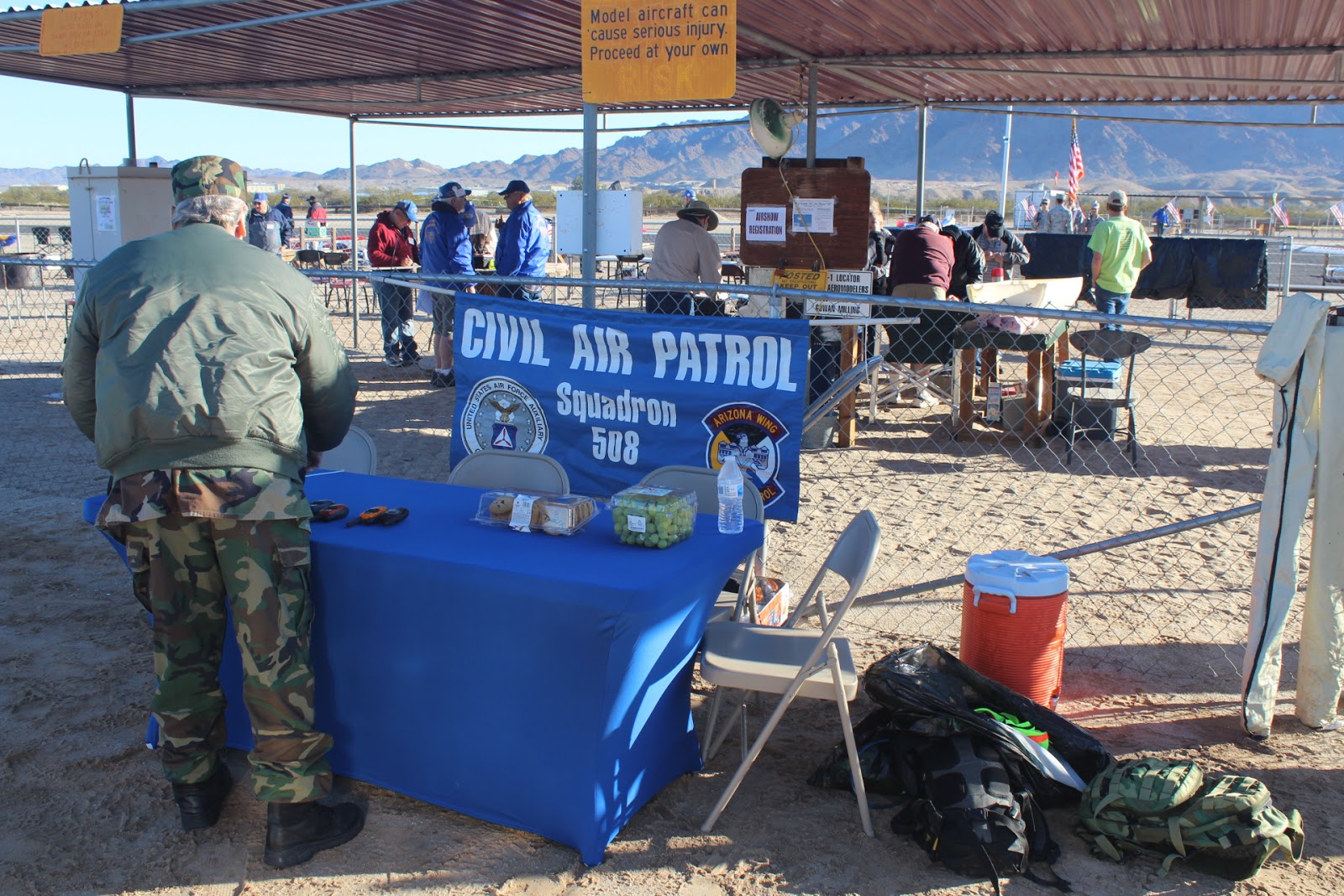
On Saturday, February 23, 2019 the Yuma Aeromodelers held their annual air show at Contreras Field located just west of the Yuma Foothills off highway 95. Club organizers once again asked CAP Squadron 508 to provide the color guard and assist in coordinating visitor parking. We gladly agreed to help as a contribution to our local community. The air show engaged squadron members in two of the three pillars of the CAP mission, cadet activities/volunteerism and aerospace education. This was the second year of Team 508’s participation. Ten cadets and 4 senior members joined in the fun.

The day started with an early muster at the CAP hangar. Everyone pitched into loading the van. Then it was just a short ride out to Contreras air field. We were treated to watching the landing approaches of a slew of powered ultralights as we neared our destination. We parked near the participant’s entrance and quickly had the van unloaded and our table, banner, and treats set up.
Com officer Scotty Haskell prepares radios at CAP table
Next up was the mandatory safety brief. The briefing was provided by cadet safety officer Busby in efficient fashion with little addition contribution needed by the senior members.
Safety Brief, safety vest
Cadets wore high visibility fluorescent yellow vests to enhance their visibility to drivers. Cadet leadership then organized pairs of cadets to supervise a smoothly operating effort to direct in-coming vehicles to the designated parking areas. Small, squadron-provided hand-held radios worked great in facilitating communications between groups of cadets and event organizers. Our coms officer made sure there were plenty of fresh batteries when power ran low.  Overall, an estimated 1,000 cars, trucks, ATVs, and motorcycles parked with no reported incidents or damage even though things had the potential to get a little “wild west” in the desert parking areas.
Cadets direct traffic to parking

Our cadet color guard presided over the opening ceremony. Their precision could only have resulted from hours of drill.


Their performance made us all proud. Technicians encountered a delay in getting the PA system working to play the Star Spangled Banner, then the anthem ran twice. The Canadian national anthem was also presented in a nod to our many Canadian winter visitors. Across the air field a colorful line of American flags streamed out against the craggy, brown foothills backdrop.

Air show performance were very impressive. Aircraft ranged from miniature jets that sounded like the real thing to high performance aerobatics to classic aircraft models.
Watching two pilots bounce their airplanes off the ground on their tails made it hard for us to believe our eyes. A very realistic guided parachute landed with aplomb. Finally, a pair of powered box kites performed a miniature aviation ballet.
The large crowd watched with undivided attention.


Through the efforts of our fine cadre of cadets when the show was over visitors made it out of the parking areas without ado.  A great day was had by all.


Tuesday, February 26, 2019

Aerospace Education Agenda for Wednesday February 27, 2019


AE Agenda for February 27, 2019

Goals/Want list
            2 cadets complete CyberPatriot Badge requirements this year
            Next year 508 CyberPatriot team advances to (Gold?) semi-final round
                        1 or 2 cadets to become Cisco/PacketTracer specialists
            10 cadets complete STEM Badge award requirements in 2019
                        (Who is working on their STEM Badge?)

1845  Announcements
            CP results
            Model Rocketry Launch Contreras Air Field Saturday April 6th
  Field Trip for Saturday April 13th- Palm Springs Air Museum

1900  Cadet Presentation-C/MSgt E. Curtis-Brief History of US Manned Space Program from Mercury to ISS

1920  Astronomy for February 2019

1930  Break

1940  PBS NOVA-Decoding the Weather Machine

2020  Adjourn


Sunday, February 24, 2019

Aerospace Education Links for February


Aerospace Educations Links February 2019


Massive storms on Jupiter captured by space probe Juno

Bright impact of a meteorite on the moon during lunar eclipse observed by a number of astronomers around the world. It turns out that observation of new impact craters on the moon is common

New image of Ultima Thule sent back to Earth from New horizons space craft

Effect of global warming on world polar bear population, a critically endangered large land mammal

***Melting glaciers, more evidence for global warming-significance of warming ocean temperatures in sea level rise

*****Multispectral composite images of the Spiral Galaxy yield new knowledge about the structure of a classic spiral galaxy

Boeing becomes investor in new supersonic business jet development program as principal developer Aerion shuffles finances

US manned space program dealt another series of delays. Both SpaceX and Boeing are subjecting their hardware and software to further testing leading up to unmanned test launches

Hubble Space Telescope spots what astronomers think is a huge storm around the north pole of Uranus-check out this impressive image.

Andromeda collision with Milky Way to occur later than originally predicted

Mars rover Opportunity has not been heard from since last June. Final commands have been sent to awaken the space craft that lasted longer and traveled farther than anyone ever imagined.

NASA presents roadmap for manned lunar missions in the next decade. The plan appears to be unreasonably optimistic considering the past performance of commercial ventures for manned space travel.

Hubble Space Telescope images show of high energy, rapidly moving plasma and an area rich in new star formation

 Neptune is swimming in moons as another’s presence is teased out of Hubble images

SpaceX and ULA continue to win government contracts to launch satellites into space

NASA probably expects further delays in manned space program due to ongoing issues with both the SpaceX and Boeing hardware development programs.

Israeli lunar lander hitches ride on a SpaceX launch vehicle

NASA clears SpaceX Dragon capsule, designed to carry astronauts into space, for launch to International Space Station as early as March 2. The first mission will be an unmanned cargo delivery and test flight.

*** Virgin Galactic carries first passenger into space as commercial space travel nears

New Horizons’ image shows unprecedented details of object at distant edge of our solar system


 *** = Video link